

Beyond the Paper Trail: Navigating South Africa’s 2026 OHS and COIDA Amendments
March 31, 2026Tealio Team8 min read time

For many organisations, occupational health and safety has traditionally been treated as a compliance exercise—policies drafted, files maintained, and documentation produced when required.
That approach is becoming increasingly difficult to sustain.
Across South Africa, a combination of evolving regulation, enforcement trends, and operational complexity is reshaping what effective compliance looks like. The result is a quiet but meaningful shift: from static documentation to continuous, demonstrable management of risk.
From Documentation to Demonstration
The Occupational Health and Safety Act has long required employers to identify hazards, assess risks, and implement appropriate controls. What is changing is not the existence of these obligations, but the standard of proof expected.
Where businesses may once have relied on:
- A signed health and safety policy
- Periodic risk assessments
- Incident logs maintained for record-keeping
There is now increasing emphasis on:
- Traceability: Clear records of when risks were identified and how they were addressed.
- Consistency: Alignment across teams, sites, and functions.
- Recency: Up-to-date information that reflects current conditions.
In effect, compliance is no longer about whether documentation exists, but whether it reflects a living system of risk management.
An Evolving Enforcement Environment
Alongside these expectations, enforcement dynamics are also shifting. While the Occupational Health and Safety Amendment Bill continues to progress, regulators are already demonstrating a more assertive approach in practice. Inspections are becoming more rigorous, and administrative shortcomings—particularly around documentation and reporting—are drawing greater scrutiny.
Under the Compensation for Occupational Injuries and Diseases Act (COIDA), compliance obligations such as employer registration, incident reporting, and assessment submissions are also being more actively enforced.
For organisations, this translates into a practical reality: non-compliance is being identified more quickly, and expectations for responsiveness are higher than before.
A Broader View of Workplace Risk
The concept of workplace safety itself is also expanding. Beyond immediate physical hazards, there is growing attention on:
- Occupational hygiene factors: Including noise, dust, and chemical exposure.
- Long-term health risks: Particularly those linked to repeated or chronic exposure.
- Psychosocial considerations: Such as fatigue, stress, and workplace pressure.
This broader lens introduces a new operational challenge. Risk is no longer something assessed periodically; it requires ongoing visibility and management.
COIDA and the Lifecycle of Responsibility
Developments linked to the COIDA Amendment Act 2022 reinforce a wider shift in accountability. The inclusion of additional categories of workers and the increasing focus on rehabilitation and return-to-work processes reflect a more comprehensive approach to employee welfare.
Employers are now expected to demonstrate active involvement in:
- Reporting and claims processes
- Medical follow-up
- Reintegration into the workforce
Responsibility, in other words, extends beyond the incident itself to the full recovery journey.
The Operational Challenge
For many organisations, the difficulty lies not in understanding these requirements, but in executing them consistently. Managing health and safety across multiple processes—risk assessments, medical surveillance, and incident reporting—often involves fragmented systems.
Over time, this can lead to:
- Fragmented information
- Delays in reporting or action
- Version inconsistencies
- Gaps in audit trails
These are not always visible day-to-day, but they become critical under inspection or investigation.
Enabling a More Connected Approach
As expectations evolve, there is a growing need for systems that bring these elements together in a structured and accessible way. Digital platforms are increasingly being used to:
- Centralise health and safety data
- Link related processes and records
- Provide real-time visibility into compliance status
- Support audit readiness through traceable records
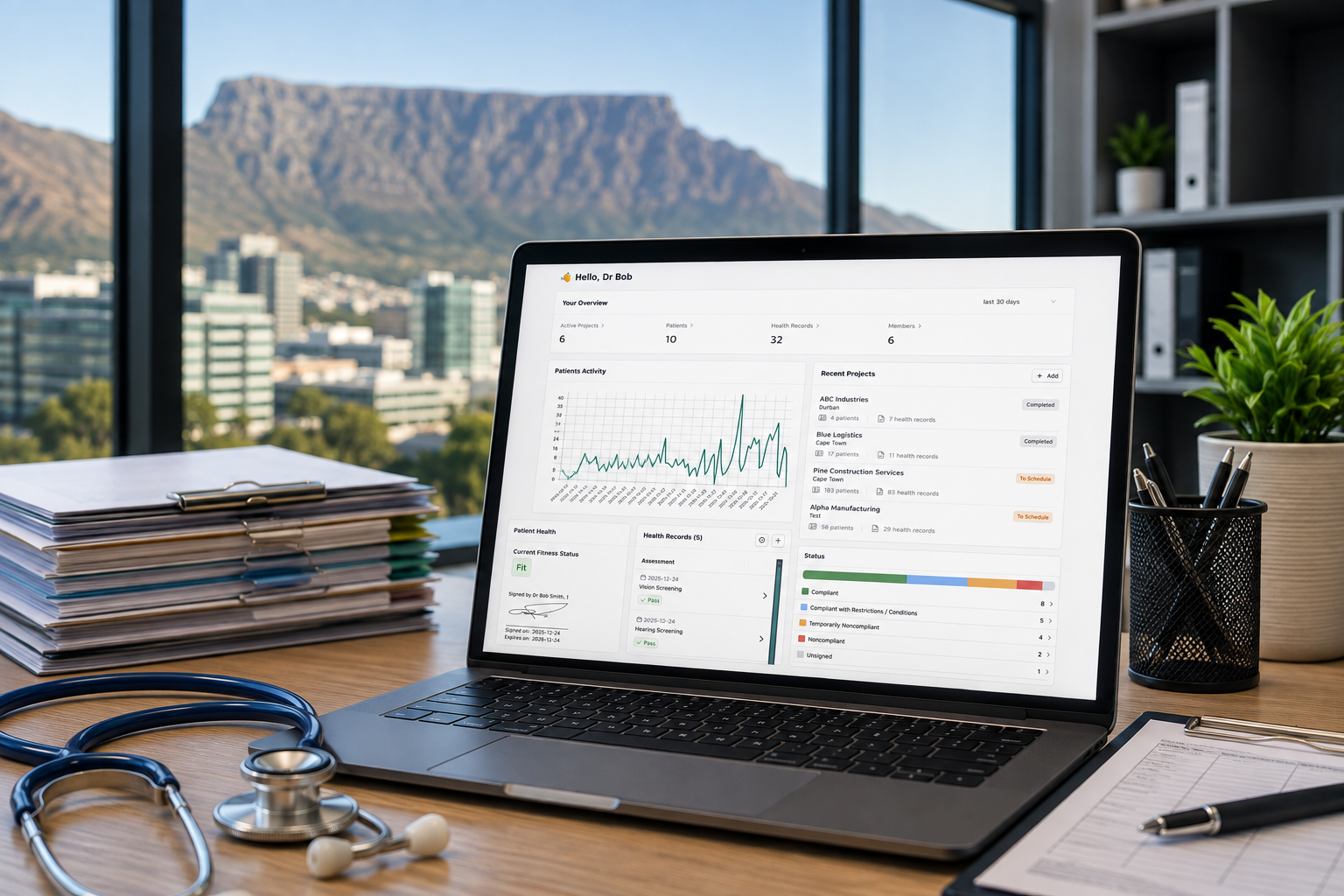
Solutions such as Tealio are designed around this principle—treating compliance not as a collection of documents, but as an integrated operational system.
Share this article on

How Tealio can empower your organization?
Enable teams to optimize onboarding procedures, shift towards digital record-keeping, effortlessly create medical certificates, and take proactive measures to manage risks, all while maintaining smooth and efficient operations.
Learn MoreWe use performance and analytics cookies to optimize your experience on our website and services. By clicking ”Allow Cookies”, you consent to our use of cookies as described in our Cookie Policy. See our Cookie Policy.
