

A Look at Occupational Health Software in South Africa
August 3, 2026Tealio8 min read time
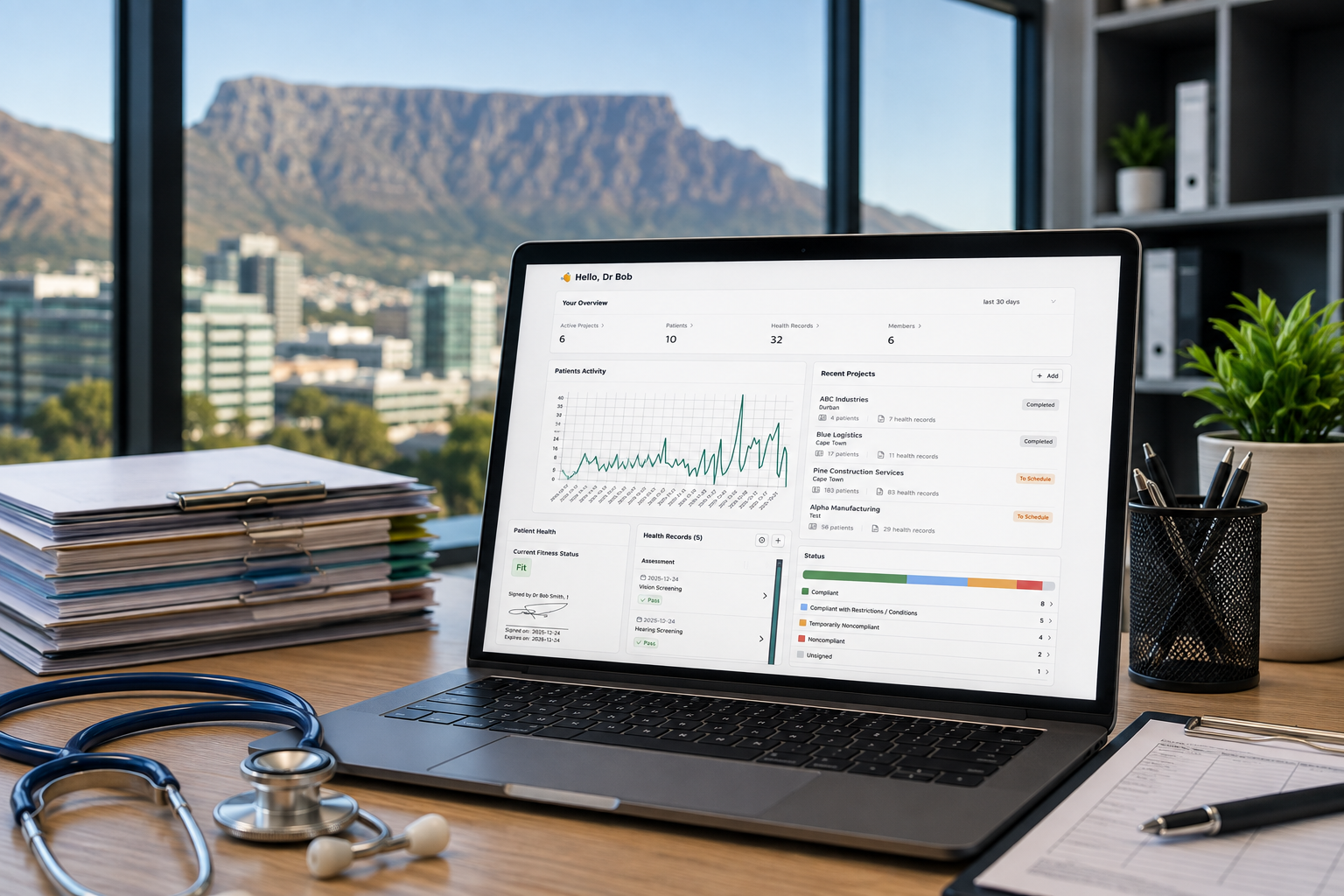
Managing occupational health in South Africa can be complex. Employers need to maintain accurate employee health records, manage medical surveillance, monitor fitness for work, maintain compliance documentation, and ensure that important information is available when it is needed.
For many organizations, these processes are still managed using paper files, spreadsheets, emails, and multiple disconnected systems. As workforces grow and compliance requirements become more demanding, this approach can make occupational health administration difficult to manage.
Occupational health software provides a centralized digital solution for managing these processes. In South Africa, the right platform can help employers, occupational health professionals, clinics, and safety teams manage occupational health information more efficiently while supporting better recordkeeping and compliance.
What Is Occupational Health Software?
Occupational health software is a digital platform designed to help organizations manage workplace health information and processes. Depending on the system, this can include employee medical records, medical surveillance, health assessments, fitness-for-work assessments, certificates, follow-ups, reporting, and compliance management.
Instead of keeping occupational health information across physical files, spreadsheets, and separate applications, organizations can use one system to centralize their information and workflows.
For South African businesses, occupational health software can be particularly useful where employees are exposed to occupational risks or where medical surveillance forms an important part of workplace compliance.
Why Is Occupational Health Software Important in South Africa?
Occupational health is an important part of managing workplace health and safety in South Africa. Organizations operating in industries such as mining, construction, manufacturing, engineering, healthcare, and other higher-risk environments may need to manage large volumes of employee health and medical surveillance information.
When these processes are managed manually, it can be difficult to know whether records are complete, whether assessments are up to date, or whether employees are due for further medical examinations.
Occupational health software can help organizations create a more structured process by bringing employee information, medical surveillance plans, assessments, documents, and compliance information into a central system.
Managing Occupational Health Records Digitally
One of the main advantages of occupational health software is the ability to maintain digital employee health records.
Instead of searching through physical files to find an employee's previous assessment or medical documentation, authorized users can access the relevant information through a central digital record.
This can make it easier for occupational health professionals to review an employee's history and for organizations to maintain consistent records across their workforce.
Digital records can also make it easier to organize information according to employees, departments, projects, workplaces, or other relevant categories.
Medical Surveillance Management
Medical surveillance is an important component of occupational health for employees who may be exposed to workplace hazards.
Managing medical surveillance manually can involve maintaining spreadsheets, checking examination dates, sending reminders, and following up with employees or managers. As the number of employees increases, these tasks can become increasingly difficult to manage.
Occupational health software can help automate parts of this process by allowing organizations to record medical surveillance requirements, track assessments, and monitor upcoming examinations.
This gives occupational health teams greater visibility into which employees are compliant, which assessments are approaching, and where follow-up action may be required.
Certificate of Fitness Management
For organizations that require employees to be medically assessed before performing certain duties, keeping track of fitness-for-work documentation can be challenging when certificates are managed manually.
Occupational health software can provide a central location for managing certificates and their associated employee records. Expiration tracking and notifications can also help organizations identify certificates that require attention.
This can be particularly useful for businesses with large workforces where manually checking individual certificates is time-consuming.
Occupational Health Compliance
Compliance is one of the key reasons organizations are moving from paper-based occupational health processes to digital systems.
South African organizations may need to manage requirements associated with occupational health and safety legislation, medical surveillance, employee records, and workplace risk management.
A digital occupational health system can help organizations create standardized processes and maintain supporting documentation in one place.
Rather than relying on individual spreadsheets or filing systems, compliance information can be linked to the relevant employee, workplace, project, or occupational health process.
POPIA and Occupational Health Records
Occupational health records contain sensitive personal information, which means organizations need to take data protection and information security seriously.
The Protection of Personal Information Act, commonly referred to as POPIA, is an important consideration when organizations collect, store, and process employee information.
Moving from paper records to a digital occupational health system does not automatically make an organization POPIA compliant. However, a properly designed system can provide tools that support controlled access, secure information management, audit trails, and better oversight of records.
Organizations should consider how their occupational health software handles access permissions, data security, audit logging, document storage, and information retention.
Occupational Health Software for South African Industries
Different industries have different occupational health requirements. A system that works for a small office-based organization may not be suitable for a mining company with thousands of employees across multiple sites.
Occupational health software can be particularly valuable in industries where employees undergo regular medical surveillance or where occupational health information needs to be managed across multiple workplaces.
For mining companies, for example, software can help manage large employee populations, medical surveillance requirements, and employee health records across different operations.
In construction, digital systems can help organizations manage employee information, medical assessments, and compliance processes across projects and sites.
For occupational health clinics, software can help manage patient records, assessments, medical surveillance plans, certificates, documents, and follow-up activities from one platform.
What Should You Look for in Occupational Health Software?
Not all occupational health software platforms offer the same functionality. Organizations should consider the processes they need to manage before choosing a system.
A useful platform should make it easy to manage employee or patient records, medical assessments, medical surveillance, documentation, and compliance information.
It should also provide clear reporting and allow users to quickly identify information that requires attention.
Security is another important consideration. Because occupational health systems contain sensitive information, organizations should understand how data is protected, who can access it, and how activity within the system is recorded.
Ease of use is equally important. A system can have extensive functionality, but if occupational health professionals and administrators find it difficult to use, adoption across the organization can become a challenge.
Moving From Paper to Digital Occupational Health Records
Many organizations still have years of occupational health information stored in physical files. Moving to a digital system does not necessarily mean that all historical information needs to be converted at once.
A phased approach can allow organizations to digitize current records while progressively incorporating historical information where appropriate.
The objective is to create a reliable digital record that makes occupational health information easier to access, manage, and maintain.
For organizations dealing with large volumes of records, digitalization can also reduce the administrative burden associated with finding, filing, and maintaining physical documents.
The Benefits of Occupational Health Software
The biggest benefit of occupational health software is not simply replacing paper with computers. The real value comes from creating a structured digital workflow around occupational health.
Information can be centralized, routine processes can be standardized, and important dates can be monitored automatically. Occupational health teams can spend less time searching for information and more time focusing on their core responsibilities.
Management can also gain better visibility into the organization's occupational health status through dashboards, reports, and compliance information.
For larger organizations, this visibility can be particularly valuable when occupational health activities are taking place across multiple sites or departments.
Why South African Businesses Are Moving Toward Digital Occupational Health Management
As organizations become more reliant on digital systems for managing business processes, occupational health is increasingly moving in the same direction.
Paper files and spreadsheets can work for smaller operations, but they become increasingly difficult to maintain as the workforce grows. Information can become fragmented, important dates can be missed, and reporting can require significant manual effort.
Digital occupational health software provides an opportunity to bring these processes together into one structured system.
For South African employers and occupational health professionals, this can mean better visibility, more efficient administration, and a more consistent approach to managing occupational health information.
Choosing the Right Occupational Health Software in South Africa
The right system will depend on the organization's size, industry, workforce, and occupational health requirements.
Before choosing a platform, organizations should consider how they currently manage medical records, medical surveillance, certificates, compliance, reporting, and employee follow-ups.
They should then identify which processes are creating the most administrative work or creating the greatest risk of information being missed.
The best occupational health software should address these practical problems rather than simply adding another system for employees to manage.
Tealio: Occupational Health Software for South Africa
Tealio is a digital occupational health, safety, and training management platform designed to help organizations, occupational health professionals, and consultants manage workplace health and compliance processes digitally.
Tealio brings occupational health records, medical surveillance, certificates, compliance processes, documents, and reporting into a central platform.
The platform is designed around the practical needs of organizations managing occupational health in the workplace, helping reduce reliance on paper files, spreadsheets, and disconnected processes.
For South African organizations looking to modernize their occupational health processes, digitalization can provide a more structured way to manage information while improving visibility across the organization.
Conclusion
Occupational health software is becoming an increasingly useful tool for South African organizations that need to manage employee health records, medical surveillance, and workplace compliance efficiently.
As workforces become larger and occupational health processes become more complex, relying solely on paper files and spreadsheets can make it difficult to maintain accurate records and identify issues that require attention.
A dedicated occupational health software platform can centralize information, automate routine processes, and give occupational health professionals and employers better visibility into their workforce.
For organizations considering the move from manual occupational health management to a digital system, the most important consideration is choosing software that fits the way occupational health is actually managed in the workplace.
Share this article on


How Tealio can empower your organization?
Enable teams to optimize onboarding procedures, shift towards digital record-keeping, effortlessly create medical certificates, and take proactive measures to manage risks, all while maintaining smooth and efficient operations.
Learn MoreWe use performance and analytics cookies to optimize your experience on our website and services. By clicking ”Allow Cookies”, you consent to our use of cookies as described in our Cookie Policy. See our Cookie Policy.
