
Building a Risk-Based Medical Surveillance Programme
Occupational health surveillance is most effective when it is based on workplace risk rather than a standardized medical examination. Every employee performs different tasks, works under different conditions, and is exposed to different workplace hazards. Because of this, medical surveillance should be tailored to each employee's Occupational Risk Profile (ORP) instead of applying the same medical exam to everyone.
This risk-based approach aligns with the principles promoted by the South African Society of Occupational Medicine (SASOM) and South African occupational health legislation. Both recognize that workplace risk assessments provide the foundation for determining whether medical surveillance is required and which examinations should be included.
Risk Assessment Is the Foundation
An effective occupational health program begins with a comprehensive risk assessment. The goal is to identify workplace hazards, understand employee exposure, and evaluate the potential impact those hazards may have on employee health. The assessment should consider the type of hazard, the likelihood and severity of harm, the frequency and duration of exposure, the intensity of the exposure, and the effectiveness of engineering controls, administrative controls, and personal protective equipment (PPE).
Regulatory requirements must also be considered, as certain hazards require medical surveillance regardless of the calculated risk level. Together, these factors create an Occupational Risk Profile that enables an Occupational Medical Practitioner (OMP) to determine whether medical surveillance is necessary and what it should include.
Understanding Workplace Hazards
Every workplace presents a unique combination of hazards. These hazards generally fall into five primary categories: physical, chemical, biological, ergonomic, and psychosocial.
Physical hazards include excessive noise, vibration, heat, cold, radiation, poor lighting, and electrical hazards. Chemical hazards involve exposure to dust, fumes, vapors, gases, solvents, heavy metals, and other hazardous chemical agents. Biological hazards include bacteria, viruses, fungi, parasites, and bloodborne pathogens that employees may encounter while performing their duties.
Ergonomic hazards relate to the way work is performed and may include repetitive movements, manual material handling, awkward postures, prolonged sitting or standing, forceful exertions, and poorly designed workstations. Psychosocial hazards focus on organizational and workplace factors such as excessive workloads, fatigue, shift work, workplace violence, stress, and harassment.
Each hazard has the potential to affect employee health differently and therefore requires a tailored approach to medical surveillance.
Evaluating Employee Exposure
Identifying hazards is only the first step. Organizations must also understand the level of employee exposure to those hazards. Exposure is influenced by how often employees perform a task, how long they are exposed during each shift, and the intensity or magnitude of the hazard.
For example, an employee working in a noisy environment for thirty minutes each week presents a significantly different level of risk than someone exposed to the same noise throughout an entire workday. Likewise, an employee who occasionally lifts heavy loads requires a different level of surveillance than someone performing repetitive manual handling throughout every shift.
Existing control measures also play a critical role in determining overall risk. Effective engineering controls, administrative procedures, and properly used PPE can substantially reduce employee exposure and may reduce the level of medical surveillance required.
Understanding Potential Health Effects
Every workplace hazard has the potential to cause specific health effects. Excessive noise can lead to permanent hearing loss, while chemical exposure may result in respiratory disease, occupational asthma, or chemical poisoning. Ergonomic hazards commonly contribute to musculoskeletal disorders, including back injuries, tendon disorders, and repetitive strain injuries. Heat exposure may result in heat exhaustion or heat stroke, while biological hazards increase the risk of infectious diseases.
Understanding these potential health effects allows occupational health professionals to select medical examinations that are designed to detect early signs of illness before permanent injury or disease develops.
Selecting the Appropriate Medical Surveillance
Medical surveillance should never be treated as a standard checklist. Instead, it should be selected according to the employee's Occupational Risk Profile and the hazards identified during the workplace risk assessment.
Depending on the identified risks, surveillance may include an occupational and medical history, health questionnaires, physical examinations, fitness-for-duty evaluations, audiometric testing, spirometry, vision screening, blood pressure monitoring, electrocardiograms (ECGs), musculoskeletal assessments, neurological examinations, skin assessments, respiratory evaluations, biological monitoring, laboratory testing, functional capacity evaluations, and specialist medical consultations.
The goal is not to perform every available medical examination, but to ensure that each examination is directly relevant to the employee's occupational exposure and capable of identifying early work-related health effects.
A Structured Risk-Based Decision Process
Modern occupational health programs increasingly rely on structured decision-making instead of subjective judgment alone. By combining workplace hazards, potential health effects, exposure frequency, exposure duration, exposure intensity, existing control measures, regulatory requirements, and overall occupational risk, organizations can develop consistent and defensible medical surveillance programs.
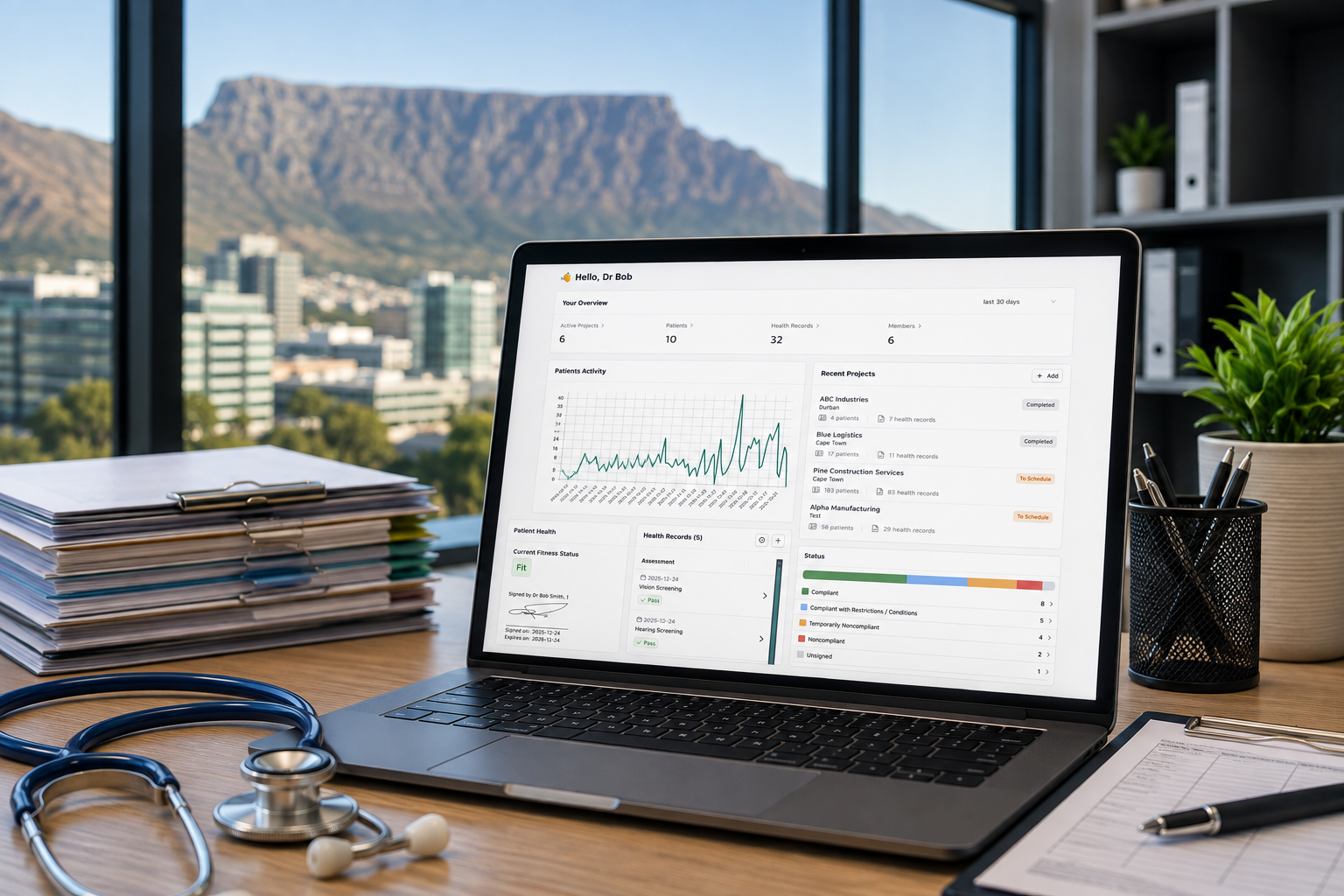
Digital occupational health platforms make this process even more efficient by linking workplace risk assessments directly to recommended surveillance protocols. While technology can generate evidence-based recommendations, the Occupational Medical Practitioner remains responsible for reviewing the information, applying clinical judgment, and approving the final surveillance plan.
The Future of Occupational Health
As organizations continue to embrace digital transformation, occupational health is becoming increasingly data-driven. Integrating workplace risk assessments with medical surveillance improves consistency, strengthens regulatory compliance, reduces unnecessary medical examinations, and helps identify work-related health conditions earlier.
Ultimately, risk-based medical surveillance ensures that the right employees receive the right medical evaluations at the right time. By focusing on actual occupational risk instead of routine compliance alone, organizations can better protect employee health, improve operational efficiency, and build safer, healthier workplaces.