
Tealio vs Paper-Based Occupational Health Records: Which Approach Works Best?
August 11, 2026Tealio Team10 min read time
Occupational health records are an essential part of managing employee health, medical surveillance, fitness-for-work assessments and workplace compliance. For many years, these records have been managed using paper files, folders and physical filing systems.
While paper-based occupational health records may seem simple and familiar, managing them becomes increasingly difficult as the number of employees, assessments and historical records grows.
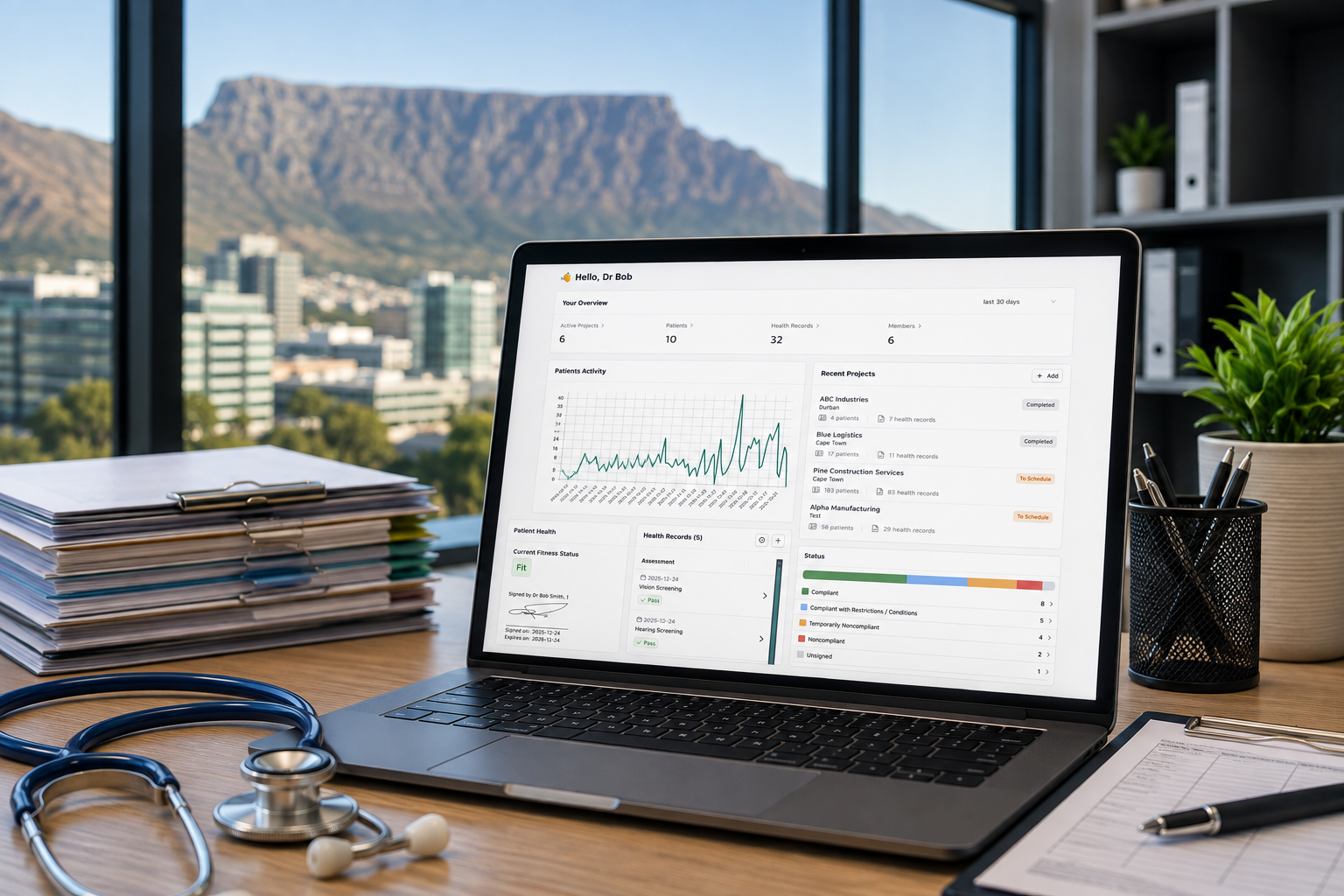
Digital occupational health software such as Tealio provides an alternative by bringing occupational health records, medical surveillance, compliance and reporting into one centralised platform.
So, what is the difference between managing occupational health records on paper and using occupational health software?
The Problem With Paper-Based Occupational Health Records
Paper records are easy to understand. An employee has a physical file, documents are printed and filed, and the information can be accessed by finding the relevant folder.
The challenge comes when an organisation has hundreds or thousands of employees and years of occupational health information to manage.
Finding a specific record can require searching through filing cabinets and folders. A document may have been filed incorrectly, removed from the file, damaged or placed in another location. If multiple people need access to records, the process becomes even more difficult.
Paper-based systems can also make it difficult to get a complete picture of an employee's occupational health history.
A medical assessment, questionnaire, laboratory result, Certificate of Fitness and follow-up record may all exist in different sections of a physical file. Reviewing that information manually takes time and creates opportunities for information to be overlooked.
Digital Occupational Health Records With Tealio
Tealio provides a centralised digital environment for managing occupational health and safety information.
Instead of relying on physical files, occupational health records can be created and managed electronically. Historical documents can also be uploaded, allowing organisations to move towards a digital record-keeping system without losing access to their existing information.
Tealio supports electronic health records, digital record-keeping, secure file retention and access-rights management.
Finding Information Becomes Easier
One of the biggest differences between paper and digital records is accessibility.
With paper files, finding information often means physically locating the correct employee file and searching through the documents inside it.
With a digital system, information can be searched and retrieved electronically.
This becomes particularly valuable when dealing with large employee populations or historical records. Instead of searching through filing cabinets, users can access the relevant employee record and review the available information in one place.
For occupational health clinics and organisations managing medical surveillance across multiple projects or sites, this can significantly reduce the administrative effort associated with record retrieval.
Reducing Administrative Work
Paper-based occupational health management involves a considerable amount of administration.
Forms need to be printed. Documents need to be filed. Records need to be moved between locations. Information may need to be copied into spreadsheets or reports. Expiry dates may need to be tracked manually.
Digital occupational health software can automate or simplify many of these processes.
Tealio allows organisations to create electronic occupational health records, customise medical forms, manage assessments and maintain historical records in a centralised environment.
The result is less time spent managing paperwork and more time available for occupational health professionals to focus on their actual work.
Keeping Track of Medical Surveillance
Medical surveillance can become difficult to manage when information is spread across paper files, spreadsheets and calendars.
A digital system can bring the relevant information together and make it easier to identify what has been completed and what still requires attention.
Tealio can be used to manage medical surveillance information and track Certificate of Fitness expiry dates, helping organisations maintain better visibility over employee compliance.
Instead of relying entirely on someone remembering to check a filing cabinet or spreadsheet, organisations can use a centralised system to manage the information.
Reporting and Compliance
Paper records are primarily designed for storing information. They are not designed for analysing large amounts of information.
If management wants to know how many employees have completed their medical surveillance, how many certificates are approaching expiry or which employees require follow-up, this information may need to be manually collected and consolidated.
Digital occupational health software changes this.
Tealio provides reporting and dashboards that can help organisations monitor occupational health and safety information across their operations.
This can make it easier for managers and occupational health professionals to identify outstanding actions and monitor compliance.
Paper Records and POPIA
Occupational health records contain sensitive personal and health information, making appropriate information security and access controls particularly important.
POPIA places requirements around the retention, protection and eventual destruction or de-identification of personal information. Organisations therefore need appropriate processes for managing sensitive employee information throughout its lifecycle.
Paper records can be protected, but doing so requires appropriate physical controls. Organisations need to consider who can access filing areas, how records are transported, how copies are managed and how documents are securely destroyed when they are no longer authorised to be retained.
Digital systems introduce their own security considerations, but can provide additional tools for managing access and protecting information.
Tealio includes access-rights management and secure digital record storage, allowing organisations to control access to occupational health information.
Digital does not automatically mean compliant, however. Organisations still need appropriate policies, processes, permissions and governance around their information.
What Happens When Records Need to Be Retained for Years?
Occupational health records can have long-term value.
Historical medical information may be required for continuity of care, audits, occupational disease investigations, compensation matters or legal purposes. Depending on the applicable requirements, certain occupational health records may need to be retained for extended periods.
Maintaining large quantities of paper records for years can require significant physical storage space.
Boxes and filing cabinets accumulate over time, and organisations must ensure that records remain organised, protected and accessible.
Tealio provides digital storage designed to keep historical records accessible, with the platform supporting long-term record retention where required by a customer's compliance needs.
Paper vs Digital: A Practical Comparison
| Feature | Paper-Based Records | Tealio |
|---|---|---|
| Record storage | Physical files | Digital records |
| Finding information | Manual file search | Electronic access |
| Historical records | Requires physical storage | Centralised digital storage |
| Medical surveillance | Manual tracking | Digital management |
| Certificate tracking | Often spreadsheet/manual | Digital expiry tracking |
| Reporting | Manual compilation | Dashboards and reporting |
| Access | Physical access to files | Permission-based digital access |
| Document sharing | Printing/scanning | Digital access |
| Scalability | Increasing storage and administration | Designed for growing record volumes |
| Audit preparation | Manual file gathering | Centralised information |
Is Paper-Based Record Keeping Still Viable?
Paper records are not necessarily impossible to manage.
A small organisation with a limited number of employees may be able to maintain an effective paper filing system.
The challenge is that the administrative burden increases as the organisation grows.
Once an organisation is managing multiple sites, hundreds or thousands of employees, regular medical surveillance, multiple occupational health professionals and years of historical information, paper-based systems can become increasingly difficult to manage efficiently.
This is where occupational health software can provide a significant advantage.
Moving From Paper to Digital Does Not Mean Starting From Scratch
One of the concerns organisations often have about digitisation is what happens to their existing paper records.
A digital transition does not necessarily require an organisation to discard its historical information.
Existing documents can be scanned and uploaded into a digital occupational health system, allowing organisations to gradually build a centralised electronic record.
Tealio supports the uploading of existing files, helping organisations bring historical information into the digital environment.
This makes it possible to take a phased approach to digitisation rather than attempting to convert every historical record overnight.
The Future of Occupational Health Records Is Digital
Paper-based occupational health records have served organisations for decades, but the demands placed on occupational health teams are changing.
Organisations need faster access to information, better reporting, improved visibility of compliance and stronger control over sensitive employee information.
Digital occupational health software provides a way to bring these requirements together.
Rather than managing medical records, surveillance schedules, certificates, documents and compliance information across separate physical systems, organisations can create a centralised digital environment.
Tealio is designed to help occupational health professionals, consultants and organisations make this transition by digitising occupational health and safety workflows, electronic records, assessments, reporting and compliance management.
The question is therefore no longer simply whether paper files work.
The more important question is whether paper-based occupational health records can continue to provide the accessibility, visibility, efficiency and scalability that modern organisations require.
For organisations ready to move beyond filing cabinets and spreadsheets, digital occupational health software can provide a more connected way to manage occupational health records.
Ready to Move Your Occupational Health Records From Paper to Digital?
Discover how Tealio can help your organisation manage occupational health records, medical surveillance, compliance and reporting in one centralised platform.
Share this article on


How Tealio can empower your organization?
Enable teams to optimize onboarding procedures, shift towards digital record-keeping, effortlessly create medical certificates, and take proactive measures to manage risks, all while maintaining smooth and efficient operations.
Learn MoreWe use performance and analytics cookies to optimize your experience on our website and services. By clicking ”Allow Cookies”, you consent to our use of cookies as described in our Cookie Policy. See our Cookie Policy.
